Highland Birds
  • Sightings
    • 2024 >
      • August 2024
      • July 2024
      • June 2024
      • May 2024
      • April 2024
    • 2020 >
      • January 2020
      • February 2020
      • March 2020
      • April 2020
      • May 2020
      • June 2020
      • July 2020
      • August 2020
      • September 2020
      • October 2020
      • November 2020
      • December 2020
    • 2019 >
      • January 2019
      • February 2019
      • March 2019
      • April 2019
      • May 2019
      • June 2019
      • July 2019
      • August 2019
      • September 2019
      • October 2019
      • November 2019
      • December 2019
    • 2018 >
      • January 2018
      • February 2018
      • March 2018
      • April 2018
      • May 2018
      • June 2018
      • July 2018
      • August 2018
      • September 2018
      • October 2018
      • November 2018
      • December 2018
    • 2017 >
      • January 2017
      • February 2017
      • March 2017
      • April 2017
      • May 2017
      • June 2017
      • July 2017
      • August 2017
      • September 2017
      • October 2017
      • November 2017
      • December 2017
    • 2016 >
      • January 2016
      • February 2016
      • March 2016
      • April 2016
      • May 2016
      • June 2016
      • July 2016
      • August 2016
      • September 2016
      • October 2016
      • November 2016
      • December 2016
  • Recording
    • The Highland List
    • The Highland Recording Area
    • Submitting records >
      • Rarities
      • HRC description species
      • Highland SOC Species Focus 2021
      • Gazetteer
  • Blog
  • Events
    • Evening talks
    • Field trips
  • Where to go
    • Inverness-shire >
      • Fort George and Whiteness
      • In and around Inverness
    • Badenoch and Strathspey >
      • Speyside in general
      • Badenoch and Strathspey
      • Northern Cairngorms
    • Easter Ross >
      • Easter Ross in general
      • Chanonry Point
      • Tarbat Ness
    • Wester Ross >
      • Ullapool and Gruinard Bay
      • Gairloch, Loch Ewe and Loch Maree
      • Loch Kishorn
    • Lochaber >
      • Fort William
      • Canna
      • Eigg
      • Rum
    • Skye and Lochalsh >
      • Lochalsh
    • Sutherland >
      • Southeast Sutherland
      • Melvich
      • Kyle of Tongue
      • Assynt
      • Loch Eriboll
  • Gallery
    • 2010-present
    • 2000-2009
    • 1990-1999
    • 1980-1989
    • Dark ages - 1979
  • Publications
    • Highland Bird Report
    • Highland Bird News
    • Books
  • Contact
    • Join the SOC
  • Links
  • Website history
  • Blog
  • AGM Minutes April 2025

​​

​

Culbin Bar 23 October 2025

11/5/2025

0 Comments

 
It was cloudy but dry as we gathered at Cloddymoss Car Park to meet Alistair Young from Forest and Land Scotland. A flock of Siskins landed on a nearby alder as we loaded our gear into the minivan. The gate was unlocked and we drove down the forest track to the edge of the saltmarsh.  Crossing the saltmarsh was a wet affair, ankle deep in water in places following the recent spell of high tides. We climbed to the top of the sand dunes and looked out over the extensive sandy beach. There were flocks of Sanderlings feeding along the shore as well as Dunlins and Ringed Plovers.  Offshore there were flocks of Gannets diving, as well as Cormorants, Shags, Eider Ducks and Common Scoters.
 
A distant tern flying along the water’s edge proved difficult to identify and it was left as a “Commic” Tern.
 
A Common Gull with a colour ring on was spied from the top of the dunes. Alistair and Josh approached more closely to see if it could be read but the bird was unco-operative and flew off! It may have been one ringed recently along the Moray coast.
 
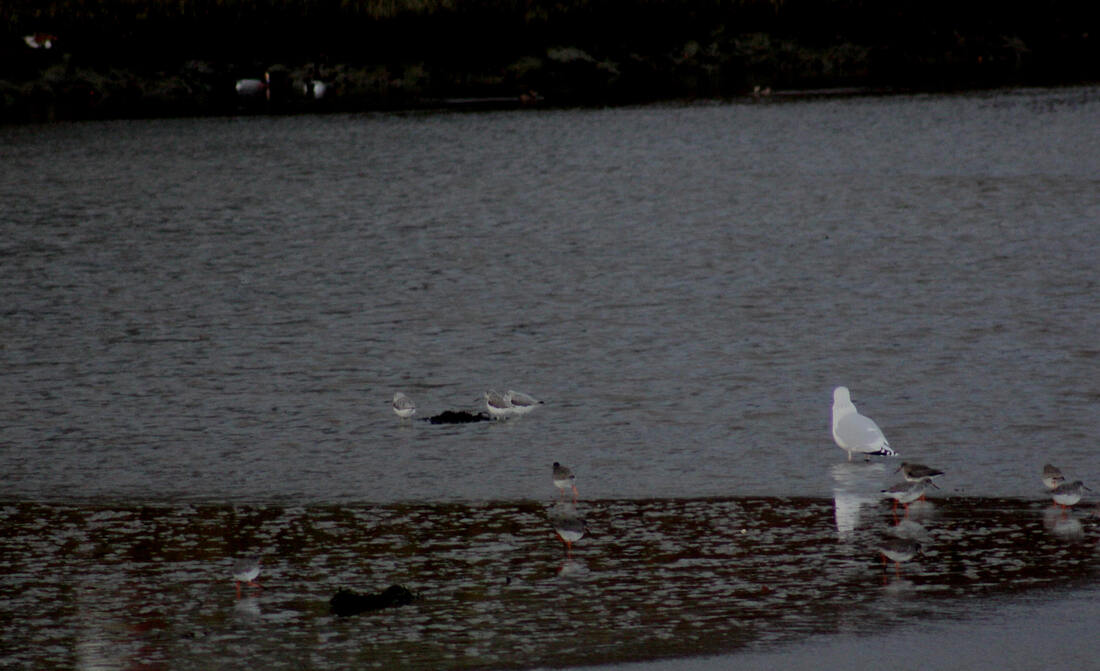
We cut back over the dunes to overlook the flooded saltmarsh. We managed to see lots of Wigeons, Curlews and Bar-tailed Godwits. Unfortunately, a couple with two spaniels managed to flush most of the roosting ducks and waders pushing them out to sea.
 
We returned over the saltmarsh adding a few species on the way- two Stonechats perched on the bushes and Crossbills flying over.
 
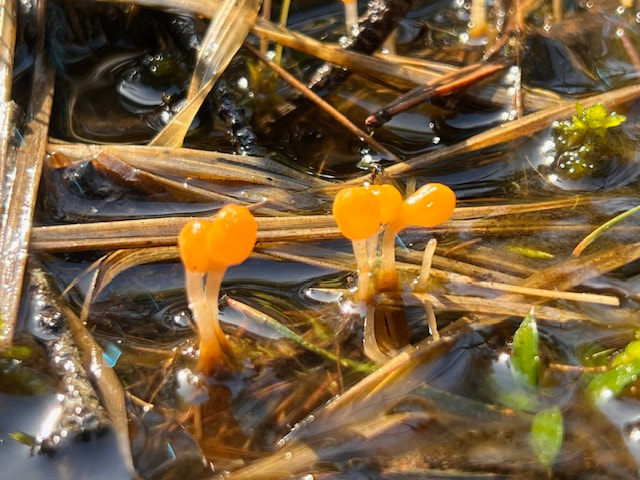
Our next stop was further east where we walked through woodland down a forest track spotting some fungi on the way and had lunch on the shore overlooking the old salmon bothy.  We added Shelduck and Turnstone to the list and three harbour seals were snoozing offshore.
 

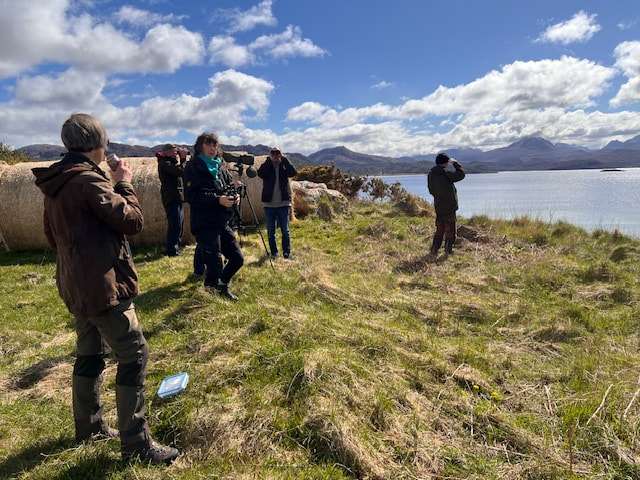
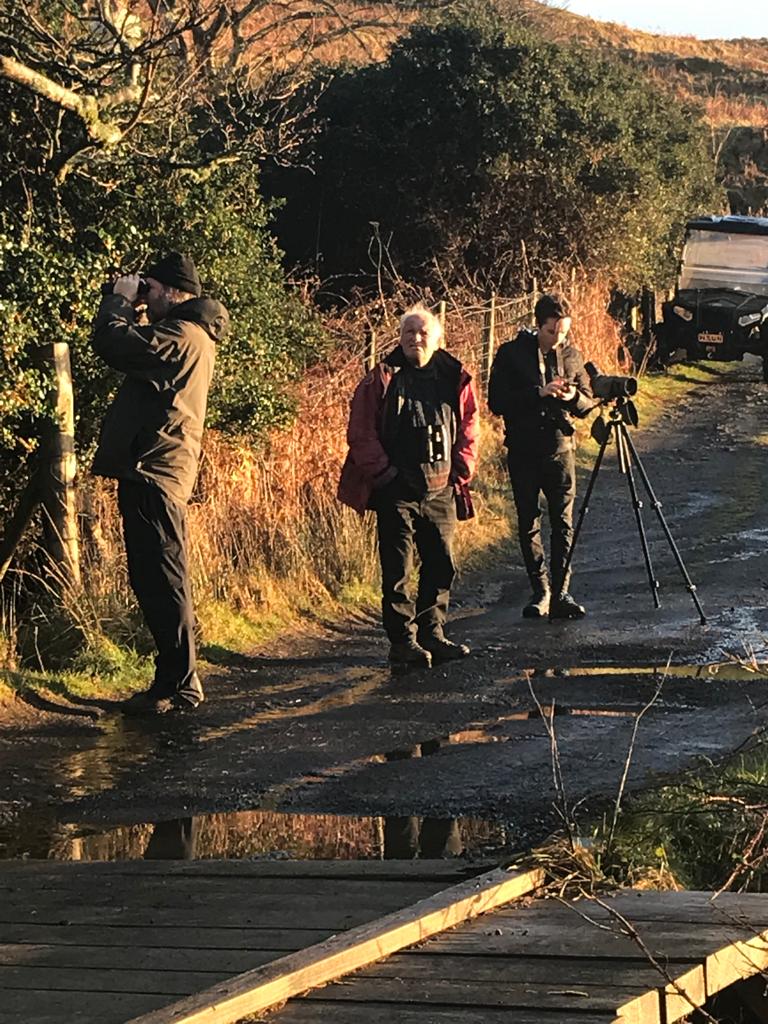
Birding at Culbin Bar (Alister Clunas)

As we walked back to the minibus we had excellent views of a Crossbill, leading to a discussion on the diet of crossbills and their classification. We returned to Cloddymoss, our starting point via the toilets at Culbin Forest Car Park. A flock of 18 Crossbills flew over the car park making a special end to the outing.
 
In total, 52 species were recorded.
 
Thanks to Lawrence, Janet and Tim, Tracy and Josh for making it such an enjoyable outing. Tracy for compiling the species list. All photographs are copyright Josh Allan.
​
Alister Clunas
(Common) Buzzard and (Common?) Crossbill (Josh Alan)
0 Comments

Whiteness - 11 October 2025

11/5/2025

0 Comments

 
​The group mustered at Fort George car park at 1030 as the day drew fine and dry albeit with a brisk south westerly wind.
We began by checking the Inverness Firth by looking west from the car park but the low tide and facing  into the wind meant other than a few distant Eiders there was little to be seen here.
As a result the group made their way across to the eastern side of the fort to check out the outer Moray Firth. Crossing the lawn a large group of Long-tailed Tits made their presence known by their distinctive chattering call in the adjacent scrub then shortly afterwards they flew over head and dropped down into the fort itself.
In addition, a large flock of Greenfinches also flew over, an unusual sight anywhere these days but particularly along the coast. As we reached the coast a few Turnstones were seen flying past over the sea, some Bar-tailed Godwits were on the adjacent sand feeding. There was little else to be seen on the coast but off-shore there was a greater selection to be found. Several juvenile Gannets were flying about,, groups of Eiders could be seen here and there, a small number of Red-breasted Mergansers, Razorbills and one of Fort George's winter specialties, a couple of Tysties not too far off shore. The regular bottle-nosed dolphins also put in an appearance on a few occasions to our enjoyment and no doubt that of some of the various dolphin watching boats in the area.
Bird of the day then presented as a juvenile White-tailed Eagle came lolloping low along the coast towards us from the east unsurprisingly scattering other birds in all directions as it approached, before reaching us the bird veered off over the range, gained height and escorted by a flock of corvids it was last seen heading west over Ardersier.
Picture
Juvenile White-tailed Eagle
​Realising we were unlikely to better that we called it a day at Fort George and made our way towards the Carse woods where we parked up and were greeted by a Crossbill calling loudly before flying overhead. The group then meandered our way towards the MOD training ground along a somewhat overgrown path managing to lose part of the group en-route. After a brief anxious search the party was reunited and had a look over the New Zealand Pigmyweed covered marsh which proved rather a letdown likely due to the invasive plant making it completely inhospitable for any bird during the late summer and autumn period.
We moved onto the bay now flanked by the large imposing fence to the new port development and beyond that the enormous manmade sand dunes which have been constructed beyond. High tide was still a few hours off but as we approached a few Redshanks departed the bay, a few Bar-tailed Godwits, Curlews and a Pink-footed Goose continued to feed off the spit directly opposite us. The group nestled down into the Marram grass in the hope that the rising tide would bring some more birds of interest closer, alas this didn't happen. However, the afternoon was beautiful with the warm sunshine on the group basking in the sheltered sun trap there were worse places to be sat despite the lack of birds. A few distant seals and dolphins made distant appearances and a Kestrel was seen hunting a few times. Another large group of finches feeding on the manmade slope of the yards dunes was probably the most notable sighting here with again a large number of Greenfinches as well as Linnets and Goldfinches amongst them. After an hour or so we began to wander back, a Bullfinch was heard calling from some nearby scrub and a Reed Bunting was seen in flight over the coastal gorse.
Picture
Assessing the Storm Amy damage.
​Back in the woods Treecreepers were heard several times but not seen and Crossbills were again located by their call and a few flight views were glimpsed. We took a different route back to avoid the overgrown route we had used earlier. This went really well until we were about to emerge on the road and then we were presented with the aftermath of Storm Amy which had struck a week earlier. Numerous enormous Scots pine trees were down across the path with seemingly no way through. However, the group not wishing to be deterred persevered and thanks to a heroic team effort all members managed to climb through, over and under the fallen boughs and emerge safely on the other side close to the cars and bringing an end to our expedition.
Picture
 Intrepid explorers emerging more or less unscathed the other side
​
​
Despite a general lack of birds it was certainly a memorable day and I suspect most folk slept well that night dreaming of white-tailed eagles and fallen trees!

Jon Clarke
0 Comments

North Ronaldsay - October 2025

11/5/2025

0 Comments

 
Who would have believed that it was so difficult to get a group of eleven keen birders to a location well served by public transport?
 
Well, yes, North Ronaldsay is 190 miles from Inverness – yes, there is a necessary drive up to Scrabster or Gills Bay in the very north of the country – yes, there is then an hour and a half ferry trip over the sometimes unpredictable Pentland Firth – followed by a drive up mainland Orkney to its airport outside Kirkwall – and then a flight in what looks perilously like a rather large model aeroplane. But that should be all in the day’s work for the intrepid traveller. Had it not been for Storm Amy.
 
In the end three of us made the journey together two days late and two, who had got up to the islands before the storm hit them, were able to make it to the Observatory on North Ron. for a limited time. 
Wheatear, a dark Redpoll and a pale one, surely one of the "Arctic" forms (Philip Wilson)
​A large flock of Golden Plovers in the fields beside the observatory delighted one of us who got up before breakfast, on the one day when the weather tempted her out, and the waders on the beaches at both Westness and The Links were a sight which we all very much enjoyed. Sanderlings, Dunlins, Turnstones, Redshanks, Ringed Plovers and Purple Sandpipers were all anxious to make the best use of exposed sands while the sunlight lasted and provided us with a memorable spectacle. The Snipes on the inland lochs were too numerous to count, but a single Ruff stood out, as did a Greenshank; and a Little Stint was seen by some.
 
On several occasions we were drawn back to Bewan Loch near the Old Beacon at Dennis Head and were ultimately rewarded with close up views of two Curlew Sandpipers, Bar-tailed Godwit, Shoveller, Gadwall and Pintail. Whooper Swans were arriving from their northern breeding grounds and the count each day was different. The other bird we saw several times each day was Hen Harrier, with at least two ring-tails and probably more than one beautiful pale male bird present during our stay.
Bar-tailed Godwit, Ringed Plover and Hen Harrier (Philip Wilson)
​Our last two days were to provide the rarities. Firstly, a White-rumped Sandpiper on the Links and our thanks to Maddy for stopping to alert us to this and leading the way across what seemed to be a vast expanse of shore, to get to the puddle it had chosen as its feeding place. Then, almost the last bird of the trip; a probable Black-headed Bunting. This was frustratingly mobile along the rough boulders and stones on the shore at Dennis Head, but, though in typically enigmatic plumage, this was a “lifer” for two of the three of us. First calendar-year birds such as this are difficult to separate from Red-headed Bunting (breeds even further SE) and many remain indeterminate.
Picture
White-rumped Sandpiper (Philip Wilson). An annual vagrant from N America or far eastern Russia.
Picture
(probable) Black-headed Bunting - a vagrant, breeding SE Europe through to S Russia, wintering in India (Philip Wilson)
Very many thanks to Philip who drove us around the island (and sometimes into and out of some very sticky corners) with unabated enthusiasm. 

​Sue Sykes
0 Comments

Maelstrom in Moray- 18 September 2025

9/22/2025

0 Comments


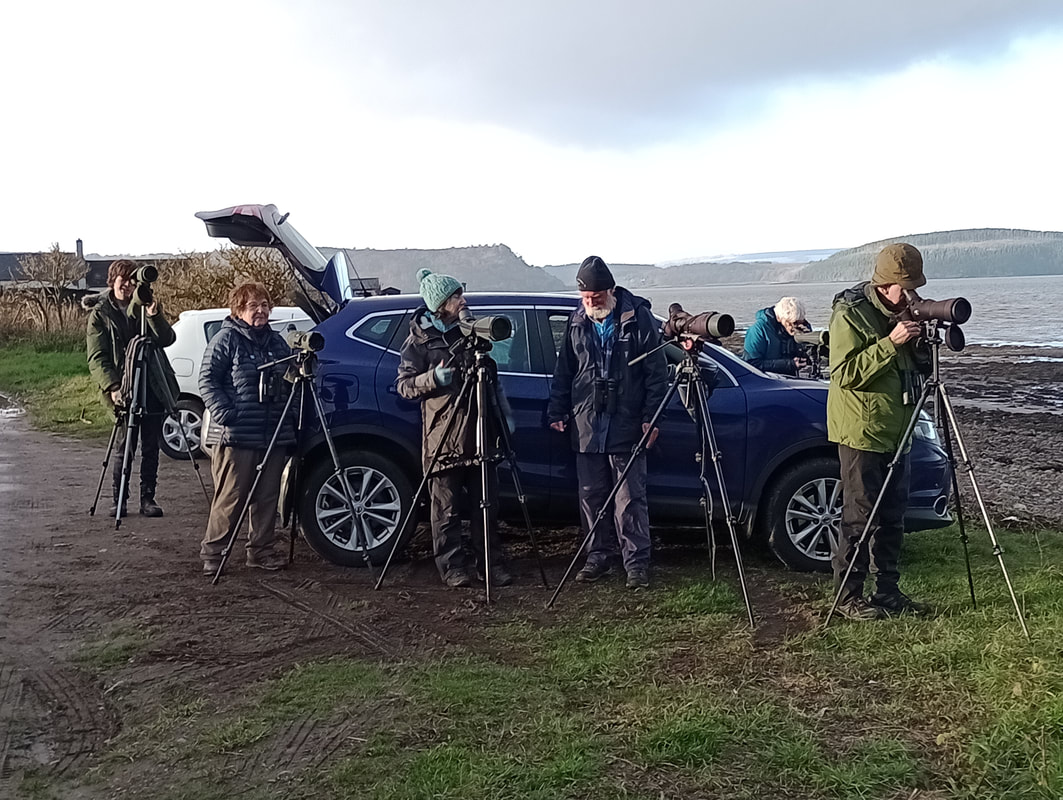
Only five members set off on a bright day in two cars along the busy A96 for Moray, not stopping until Forres, where some food restocking was done in the Tesco store. Findhorn Bay was a turmoil of waves and spray, driven towards the hide by the persistent SW gale. Keeping the personnel, let alone the telescopes, upright made birdwatching all but impossible, although large skeins of Pink-footed Geese were obviously flocking to the saltmarsh on the south side. A search for more shelter in the village allowed the identification of a large group of Redshanks huddling on the far bank. A visit to the East Beach was productive, with Guillemot, Razorbill and an unidentified Shearwater seen bobbing in the waves, while Gannets dived in the distance. Returning to the hide, the water had at last receded a few yards from the shore, allowing some Oystercatchers and a single Ruff, feeding on the sands, to be studied through jittering telescopes.
The next move was direct to Lossiemouth East Beach, where the estuary bank afforded some shelter from the wind and the sun shone. The near foreground provided continuous entertainment as small numbers of waders, Ringed Plovers, Bar-tailed Godwits, Dunlins, Turnstones, one Sanderling, four Ruffs and two Curlew Sandpipers came and went among the larger groups of Wigeons, Mallards, Teals and Goosanders. Within the large assemblies of gulls further inland in the estuary, two Lesser Black-backed Gulls were spotted among the hundreds of Great Black-backs.
Loch Spynie provided further shelter from the now receding wind and a Great Spotted Woodpecker and Tree Sparrows were evident among the throngs of finches, tits and sparrows busy at the feeders. The loch itself was relatively quiet, apart from a group of Tufted Ducks, some Little Grebes, a Cormorant and a family of Mute Swans. Pink-footed Geese came and went in the background, briefly trying to join some Greylags on the loch, but the highlight, for one of our group on her first outing, was a brief sighting of a Marsh Harrier alighting in the far corner where it apparently normally roosts. Despite a lengthy wait for it to reappear, it was never seen again.
The diversion to Garmouth and Kingston-on-Spey added the best part of an hour to the day but proved fruitless, as the species seen the day before were no longer there. The eastern shore of the river where the action seemed to be was too far off to study. There was nothing left but to join the slow progression back along the A96, during which two Kestrels were added to the list. A total of 60 species for the day was barely passable, but several surprising omissions probably had a lot to do with the overwhelming wind during the morning.    
Alex Joss.


0 Comments

Ullapool-Stornoway Ferry - 7 September 2025

9/22/2025

0 Comments

 
​The day started bright as 14 SOC Highland members gathered on Decks 5 and 6 of the Ullapool to Stornoway ferry.   The tail end of Hurricane Erin was only felt in blustery eastern winds.  South-west winds for shearwaters or north west winds for petrels are more favourable sea-watching conditions in the Minch, but at least it was dry with good visibility.   We started with the long-staying Viking (Glaucous x Herring) Gull  in Ullapool harbour.   Sailing through Loch Broom, a pair of White-tailed Eagles were perched up on hilly crags, and the first Great Skuas were showing off the Summer Isles.  It was noticed that the auk numbers had mostly dispersed from July/August, but Gannets were putting on a show, along with Kittiwake as we scanned unsuccessfully for Sabine’s Gull. Fulmars were present as were the first Storm Petrels and a fine Leach’s Petrel was picked up in my scope.  Arctic Skuas were chasing Kittiwakes as more petrels showed and I hoped that folk were getting onto them – it’s quite tricky to pick them up and then keep them in sight.  The scope is a great asset in picking up the wee petrels at 30x magnification around 200 metres out.   Some Manx Shearwaters flew 150m north and again the scope came in handy when I picked out a Great Shearwater cruising over the waves showing classic features such as pale cheeks, dark bonnet and pointed tail with white then black tip. Wings are notably long, and more pointed than Manx.  I was delighted that at least Ruairidh got onto it as it moved north west.   In fact, Josh and Ruairidh (our young members) were constantly scanning  - young and enthusiastic; and were rewarded for their efforts in life-ticking Great Shearwater, Storm and Leach’s Petrel!    Some of the group remained onboard for lunch on the top of Deck 6 and enjoyed seeing Red- and Black-throated Divers flying to and fro.   By the time we returned to Ullapool we had clocked up some great birds and a total of 28 petrels (3 being Leach’s ).   Grateful thanks to everyone who came and to Alister and Alex who assisted.  Also to Sue and Hugh for helping me back to my vehicle.   Well done Josh and Ruairidh for constantly trying  - a great day out with the Highland SOC.
 
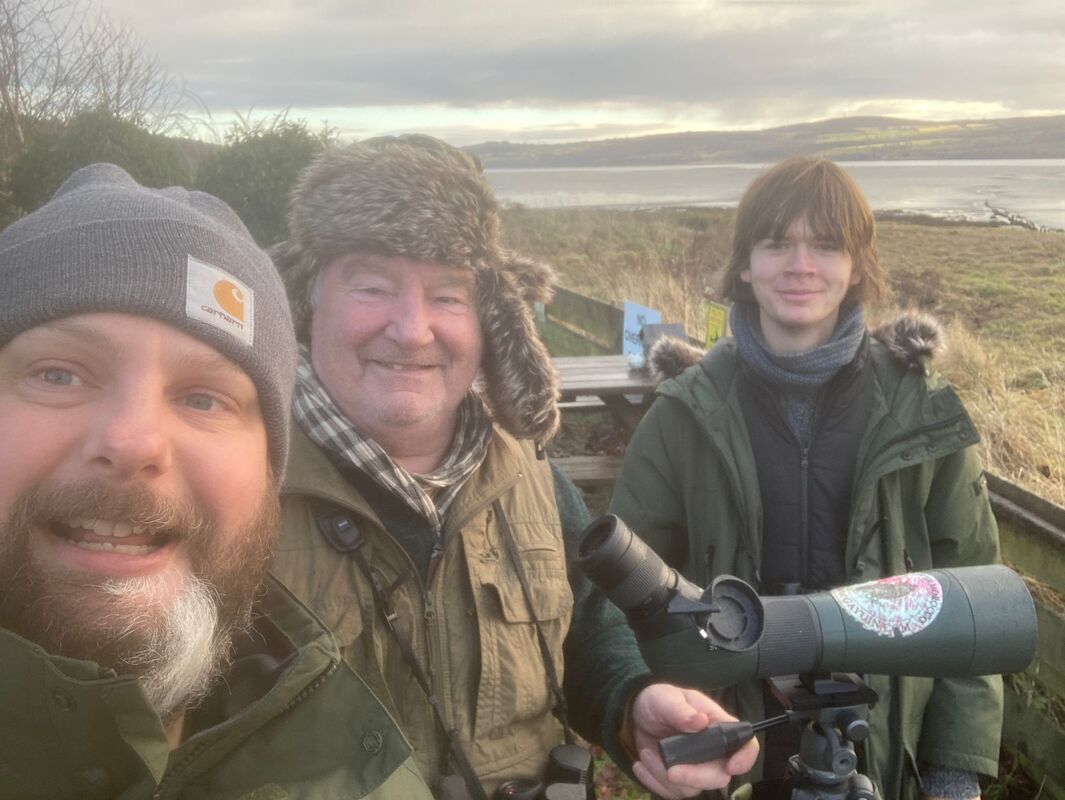
Thanks from your leader – Alan Macaskill
 
 
Picture
Josh, Ruaridh and Alan (Mary Galloway)
0 Comments

North Ronaldsay - 17th to 21st May 2025

6/17/2025

0 Comments


With a ridge of high pressure over the Orkney Islands and strong (cold) northerly winds, weather patterns during these 4 – 5 days affected bird movements but then that’s all part of the random nature of birding. The mega rarities, warblers, smaller summer migrants (bluethroats, shrikes) were largely absent, and the Bird Observatory volunteers were not netting but we were compensated by a wealth of waders - fields full of Turnstones in colourful rusty summer garb waiting their chance for the onward journey to Iceland and northern Scandinavia, then as the wind strength decreased, they were gone. We also had flocks of Knots and Bar tailed godwits, looking smart in summer plumage and, on the shore, Sanderlings, Purple Sandpipers, Ringed Plovers and Dunlins.


American Golden Plover, Knots and Turnstone (Dave Barnett).
rom the hide overlooking Ancum Loch we had good views of Little Stint, Snipe and some claimed a Water Rail ran over their feet.  A textbook American Golden Plover was an easy spot, feeding with the North Ron sheep on the abandoned golf course behind Linklet Bay. Every 20 metres or so there were Starling nests in the stone walls with youngsters demanding food and sounding a bit like Corncrakes and in the absence of cliff ledges, confiding and affectionate pairs of Fulmars had established nests in the shelter of the walls.  Offshore there were sightings of skuas, divers, Guillemots, Razorbills, Puffins, Gannets and terns.
​
S​On the last evening, a Spotted Flycatcher turned up just outside the dining room and there was a Black Redstart in the bushes outside the observatory that we looked for but failed to see.   
We missed the Dotterel, reputedly on the headland on the north west of the island, and a pod of 2 orcas. 

Black Guillemots, Great Northern Divers and Snipe (Dave Barnett).
​Alison at the Bird Observatory along with the volunteers, produced excellent fresh homecooked breakfasts and evening meals which included roast North Ron mutton on Monday evening. Rhubarb is about the only fresh home grown produce available this time of year, and Alison made this into delicious rhubarb crumble and rhubarb ice cream. We found breaking the day at midday welcome, so we had homemade soup and sandwich lunch on demand. Our thanks to Alison for looking after us so well, and to Craig for helping us to locate birds.

We were a group of 10 and arrived variously by tiny 6-seater plane from Kirkwall or twice weekly ferry. We were indebted to Sue for organising (enjoy the autumn trip) and to Hugh for driving the community minibus, without which it would have been much more difficult to get around. There are bikes for hire at the airport but cycling into a northerly headwind without gears is not recommended, ask Fiona!
Picture
Lesser Whitethroat (Dave Barnett). 


In total, 83 full species were recorded by our party.

​Maggie Gilvray
0 Comments

Thursday 22 May - Dundreggan Estate

6/10/2025

0 Comments


Six of us turned up at Dundreggan Rewilding Centre for a relaxing walk around part of Dundreggan Estate in Glen Moriston on a beautifully sunny day in May. The attendees included two lovely young visitors from Australia, Grant and Laura who managed to fit in a Highland SOC outing as part of their 10-month global travels. As well as reading about Trees for Life and their plans for Dundreggan at the centre, we enjoyed coffee and cakes in the café before Carol gave us a tour of the tree nursery and some of the marked paths. We saw/heard 38 species, with several good views of a smart-looking Spotted Flycatcher and an abundance of vocal Redpolls amongst the highlights.
At Dundreggan (Carol Miller)
0 Comments

SOC West Coast Trip, Thursday 22 April

6/10/2025

0 Comments


Only six members, Carol, Caroline, Liz, Sue, Alex and Tony, in two cars, attended this trip to the Ullapool – Achiltibuie area, but they were treated to a day of wonderful, sunny spring weather and breath-taking scenery. Some good birds were also seen in a total of 76 species, plus the migratory European White Wagtail sub-species. For the knowledge of where to locate these species, we are indebted to Ullapool resident, Andy Williams, who at short notice provided detailed notes, and maps, of recommended locations to visit and the species we might hope to find at each one. Most of the places we stopped at for short walks were recommended by Andy.
 
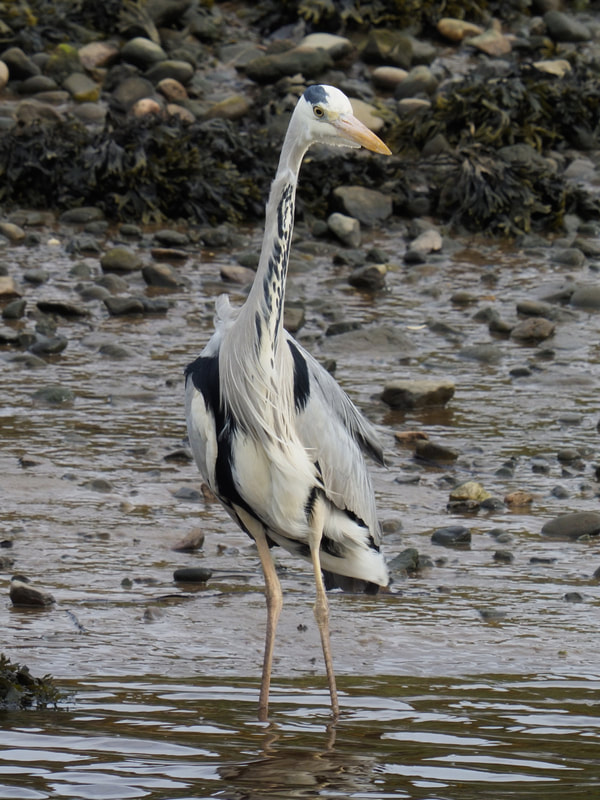
The meeting place was the garage at Tore and early species recorded on the way through the Black Isle past Garve were Chiffchaff, Willow Warbler, Swallow and Mute Swan (on Loch Garve), but not Red Kite. The first stop, at the bridge over the Blackwater at the entrance to Strath Vaich was very productive. Among the species noted were, Dipper, Grey Heron, the first Cuckoo of the day, Raven, Kestrel and, perhaps the species of the day, an Osprey which circled around for at least 10 minutes. Moving on to the west end of Loch Droma, a walk over the dam yielded good views of Greenshank, Common Sandpiper, Black-throated Diver and a displaying Golden Eagle.
 
A very pleasant circular walk was had across the road from the Lael Forest Reserve, walking around the fields of a farm and back along the river. There were good views of some singing warblers, including Blackcap, as well as Tree Pipit, Goldcrest, Long-tailed Tit and 2-3 White Wagtail sub-species. Lunch was partaken overlooking the river mouth on the west side of Ullapool Bay, where the only Wigeon of the day were seen and the first of at least 15 Great Northern Divers. Moving on to Ardmair Point, Eider and Black Guillemot were seen in the bay and, on the point, the first of many Wheatears and the sole Twite.
 
Driving along the Achiltibuie road, it was shocking to see and still smell the extent of the recently extinguished conflagration on Stac Pollaidh, stretching from the shores of Loch Lurgainn, where a carelessly discarded disposable barbecue was found, to the very summit of the hill. A Sand Martin was spotted near the loch and the only Stonechat of the day wasn’t found until we were returning along the same road. By scanning the bay at Achnahaird, Kittiwake, Lesser Black-backed Gull, Guillemot, Razorbill and three Red-throated Divers were added to the list.
 
The furthest point of our travels, Reiss, was a magic place, with an end-of-the-world feel. The small loch behind the village yielded up to three Red-breasted Mergansers and at least six Shelducks, while around the shores were Lapwings, Rock Pipits, a single Dunlin and two Great Skuas. The return journey was driven with more haste than the outward one, to avoid being too late for fish and chips at Ullapool. Later, a Red Kite was at last spotted while passing over the high part of the Black Isle.   
Loch Lurgain looking towards Stac Pollaidh and lunch at Ullapool (Carol Miller)
0 Comments

Handa - Saturday 10 May 2025

5/16/2025

0 Comments


Handa Island did not disappoint - weather was glorious - blue skies, blue seas and a breeze.  An 0700 departure from Inverness in shared cars meant our group of 14 (including two youngsters) arrived at Handa ferry by 0930. There was already a queue and we were the third trip across.  The last ferry back would be at 3.30pm.   On arrival to the island we were told the last ferry would be 2.45pm!!   Tide and wind?? Time was short.     
Picture
Great Skua (Sue Seright)
​At the sandy beach the sound of Arctic Terns filled the air.    A volunteer warden gave a brief greet and meet before we headed out towards the Great Stack.   By the ruined village (deserted during the potato famine)  Willow Warbler, Sedge Warbler, Wren, Dunnock and Reed Bunting were noted in the scrub, whilst overhead Great and Arctic Skuas were wheeling around – pairing up, displaying and calling.   There seemed much evidence of Bonxies although we were told their numbers had crashed from 200 pairs to 60 pairs due to avian flu. ​ Most of the Arctics were dark phase.   A Red-throated Diver flew over calling. (It was later seen on the fresh water lochan with at least 8 Bonxies.  The warden assured us that the divers do sometimes succeed in raising young).   Our party divided – some going clockwise, some anticlockwise with board walk most of the way.  Redpolls were heard and a male Stonechat spotted.   As well as birdlife, the spring flowers were in flower – patches of primrose, violet, thrift on the cliffs with milkwort, and lousewort.  Approaching the coast facing the Atlantic – a raft of birds was seen – feeding and settling and then taking off like a snowstorm - Kittiwakes.
L to R: Arctic Skua (Josh Allan), Kittiwake (Josh Allan), Puffin nest-building (Phil Wilson)
By now auks were in evidence and we all spent some time overlooking the Great Stack with nesting Guillemots, Razorbills, Fulmars, Herring and Great black-backed gulls and a handful, only, of Puffins.  The Puffins were busy pulling up vegetation and creeping into holes nest building.  Back across the moor, Skylarks were in full song with the occasional Meadow Pipit and some pristine Wheatears.

Waiting at the jetty for the return trip a Ringed plover was seen.    Back on the mainland, a Sedge Warbler was in song, a Common Sandpiper trilled and Greenfinches, Goldfinches and a Song Thrush were noted.    All in all, an excellent trip with 45 species logged.
​Mary Galloway
Picture
0 Comments

Corrimony Black Cock Lek – Saturday 12 April

5/12/2025

0 Comments

 
​Oh my goodness, what a treat, what a spectacle, what delightful sights and sounds!
Black Grouse (Phil Wilson))


Twelve intrepid members of SOC Highland Branch, including three young birders, gathered at Corrimony Chambered Cairn car park at 5.30am to meet up with the RSPB warden for Corrimony, Alex Flinn, who was to be our guide for the morning. The weather seemed perfect with the almost full moon low in the clear sky and dawn was breaking when we heard our first birds of the new day - Blackbird and Goldcrest. We set off up the hill in three cars to the first lek area where three males were apparent, although two swiftly disappeared leaving one lonesome male. Using the cars as mobile hides we waited about 15 minutes hoping for some further action, but nothing doing and so we moved further on beyond Loch Riabhachain to another traditional lek site. This was more like it. eight male Black Grouse were busily sparring with a partner or two and seemed completely unfazed by our presence. The lyre-shaped white tails were well cocked and spread for display, contrasting with the blackish/purplish gloss of the body feathers and the red comb-like eyebrows. Add to that the bubbling and distinctive singing and we were in for a real treat. What a privilege to witness, and many, many photos were taken. It was fascinating to watch and to speculate on the bird dynamics, especially when a new bird arrived to the lek making a total of 9 males. Other species we saw included Greenshank, Lapwing and Pied Wagtail. No Grey hens were seen at the lek site, although Al & Jenny saw two on the drive out. We probably watched them quietly for the best part of an hour before driving back to the loch to stretch our legs and chat to Alex who was very generous at sharing his knowledge of Black Grouse and of the RSPB Corrimony Reserve. We saw Reed Bunting, Stonechat, Grey Wagtail, Mallard, Tufted Duck and Greenshank here before heading back down the hill to the car park. Just short of the car park we had a flock of Fieldfare with a Redwing, and a Kestrel overhead.
​
Huge thanks to Alex Flinn, RSPB Corrimony Warden for a very special morning.

Nuthatch (Phil Wilson) and walking through the woods (Carol Miller)
​Most folk came back to my house for a well-deserved breakfast, and then we drove into Drumnadrochit for a walk in Craigmony Woods to look for Nuthatch. We had singing Blackcap and two Treecreepers before finally hearing the Nuthatch in the oak trees. Everyone heard and had good views of the two birds. Are they a pair?
​
A most enjoyable outing with a total of 51 birds, and well worth the early morning alarm!
0 Comments
<<Previous

    Categories

    All

    RSS Feed

Picture


​Looking after Highland's birds


  • Sightings
    • 2024 >
      • August 2024
      • July 2024
      • June 2024
      • May 2024
      • April 2024
    • 2020 >
      • January 2020
      • February 2020
      • March 2020
      • April 2020
      • May 2020
      • June 2020
      • July 2020
      • August 2020
      • September 2020
      • October 2020
      • November 2020
      • December 2020
    • 2019 >
      • January 2019
      • February 2019
      • March 2019
      • April 2019
      • May 2019
      • June 2019
      • July 2019
      • August 2019
      • September 2019
      • October 2019
      • November 2019
      • December 2019
    • 2018 >
      • January 2018
      • February 2018
      • March 2018
      • April 2018
      • May 2018
      • June 2018
      • July 2018
      • August 2018
      • September 2018
      • October 2018
      • November 2018
      • December 2018
    • 2017 >
      • January 2017
      • February 2017
      • March 2017
      • April 2017
      • May 2017
      • June 2017
      • July 2017
      • August 2017
      • September 2017
      • October 2017
      • November 2017
      • December 2017
    • 2016 >
      • January 2016
      • February 2016
      • March 2016
      • April 2016
      • May 2016
      • June 2016
      • July 2016
      • August 2016
      • September 2016
      • October 2016
      • November 2016
      • December 2016
  • Recording
    • The Highland List
    • The Highland Recording Area
    • Submitting records >
      • Rarities
      • HRC description species
      • Highland SOC Species Focus 2021
      • Gazetteer
  • Blog
  • Events
    • Evening talks
    • Field trips
  • Where to go
    • Inverness-shire >
      • Fort George and Whiteness
      • In and around Inverness
    • Badenoch and Strathspey >
      • Speyside in general
      • Badenoch and Strathspey
      • Northern Cairngorms
    • Easter Ross >
      • Easter Ross in general
      • Chanonry Point
      • Tarbat Ness
    • Wester Ross >
      • Ullapool and Gruinard Bay
      • Gairloch, Loch Ewe and Loch Maree
      • Loch Kishorn
    • Lochaber >
      • Fort William
      • Canna
      • Eigg
      • Rum
    • Skye and Lochalsh >
      • Lochalsh
    • Sutherland >
      • Southeast Sutherland
      • Melvich
      • Kyle of Tongue
      • Assynt
      • Loch Eriboll
  • Gallery
    • 2010-present
    • 2000-2009
    • 1990-1999
    • 1980-1989
    • Dark ages - 1979
  • Publications
    • Highland Bird Report
    • Highland Bird News
    • Books
  • Contact
    • Join the SOC
  • Links
  • Website history
  • Blog
  • AGM Minutes April 2025